
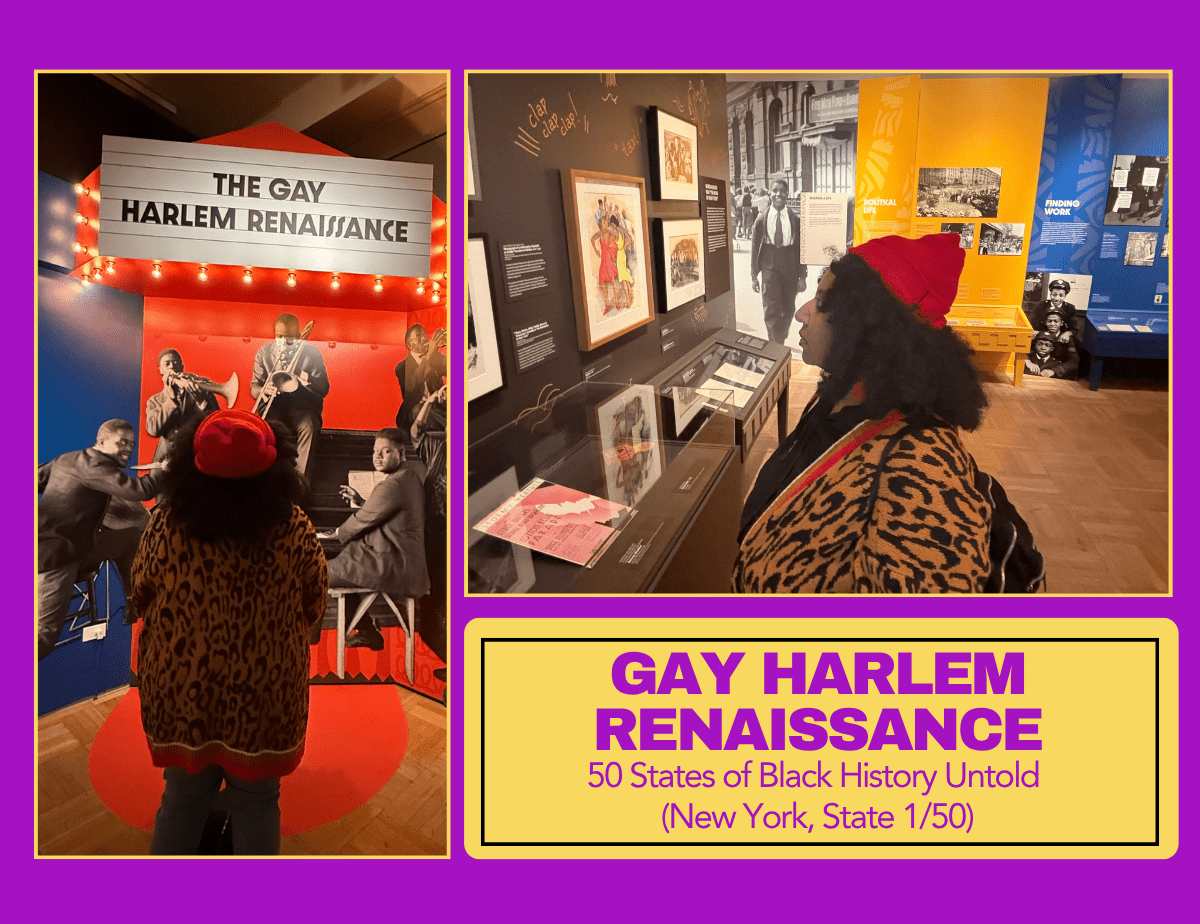
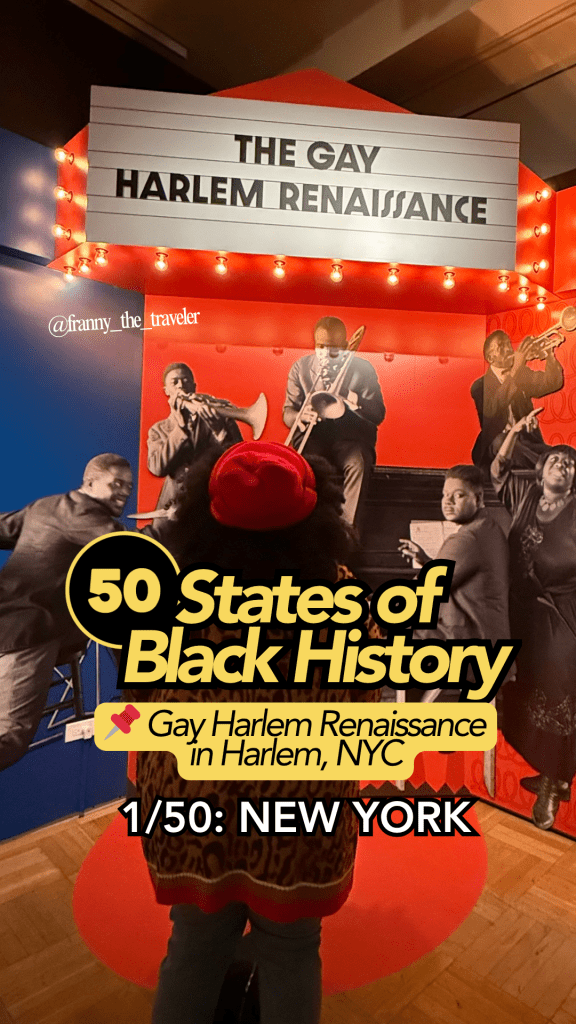
Have you heard about the Gay Harlem Renaissance? Fam, I had not.
Where was this in our history textbooks!?!? And this is why I gasped when I learned about this exhibit.
Not going to lie, the New York Historical Society was never on my radar as a place telling our full stories. Prior to that, I’d only been once before—for a Harry Potter exhibit—so I assumed (key word) it leaned more “watered-down history” than “truth-telling.”
But one day, while wandering the neighborhood, I spotted the museum again and thought, Let me look this up. When Google told me they had a Gay Harlem Renaissance exhibit, I literally stopped in my tracks. That was my sign. I had to go back.
And, I did go back with a friend for free.99 on a Friday night.
What struck me was the contrast. The museum sits along Central Park West, surrounded by wealth and whiteness, but inside? A whole different world. Exhibits on Frederick Douglass’ America. A New York Sari exhibit centering Indian American stories. A film on the rise of women’s rights. And, of course, the Gay Harlem Renaissance.
At that point, I was hype—this was about to be a night at the museum that mattered in New York City, a prime example of hometown tourism in action.
The New York Historical Society isn’t just a museum. In fact, it’s the oldest museum in New York City, founded in 1804 and committed to preserving the city’s collective memory. But what makes it special today is its intentional choice to uplift stories many institutions ignore.
Over the past decade, NYHS has become a leader in telling fuller, more honest histories—Black, Indigenous, LGBTQ+, immigrant, and intersectional stories that rarely make it into textbooks. Exhibits like The Gay Harlem Renaissance, Black Citizenship in the Age of Jim Crow, and Slavery in New York show they’re not afraid to tell the truth.
And that’s important. Museums help decide what “counts” as history. NYHS uses its platform to amplify stories others erase.
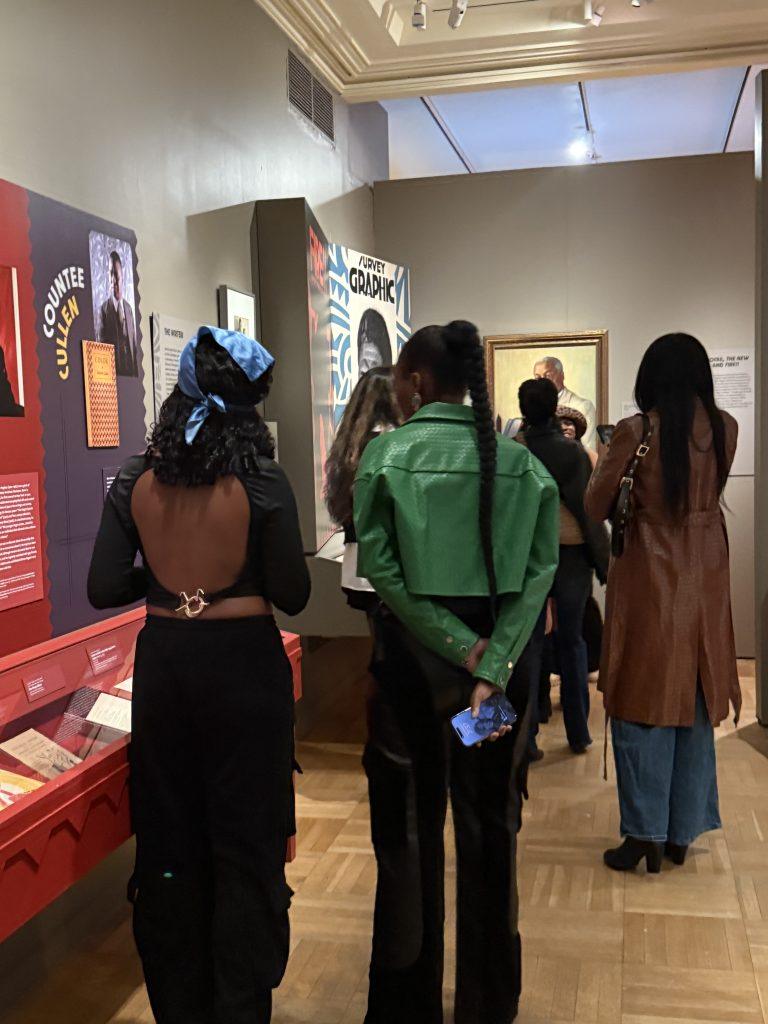
From the outside, NYHS looks like any other museum. But the minute you walk in, Frederick Douglass welcomes you from a massive exhibit on the left. Still, I had one mission: the Gay Harlem Renaissance.
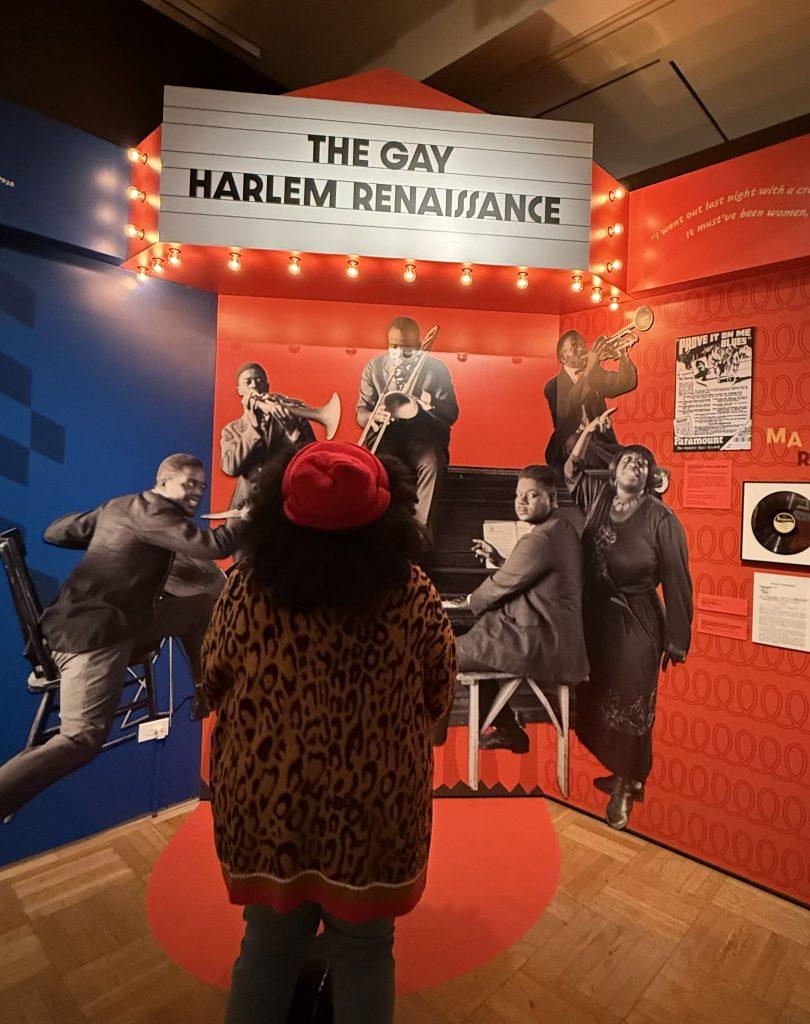
Since Fridays are pay-as-you-wish, getting a ticket was easy. I checked my coat, climbed the stairs, and immediately saw the bright yellow sign glowing at the top: Gay Harlem Renaissance. I knew right then this exhibit was going to be bold.
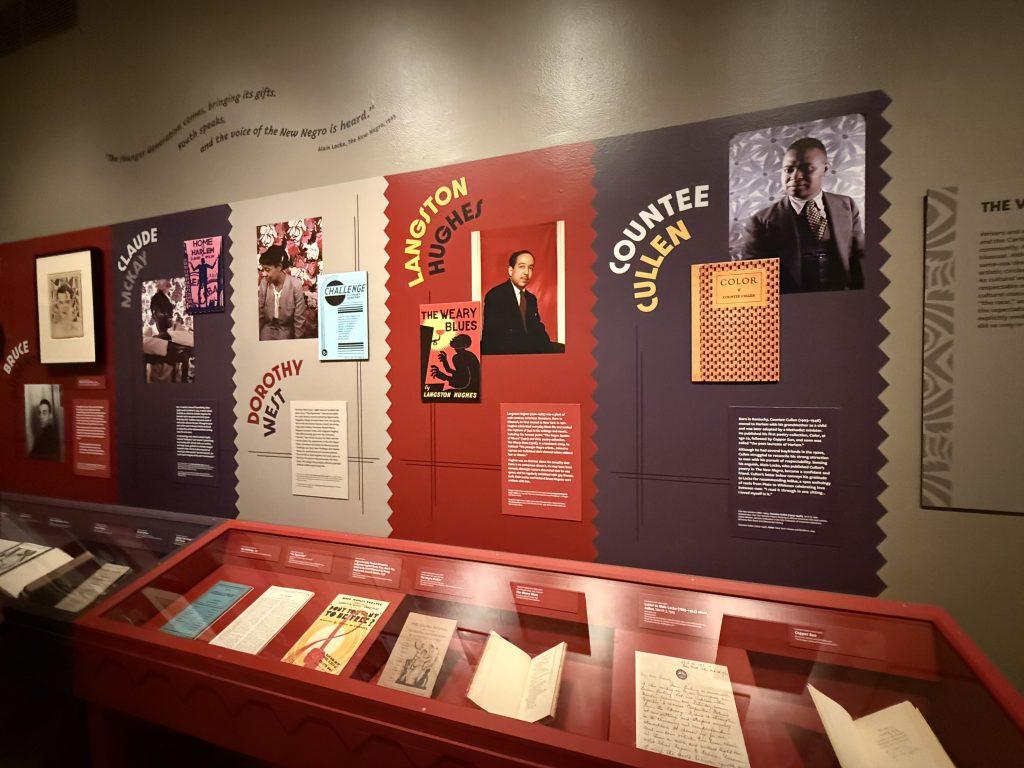
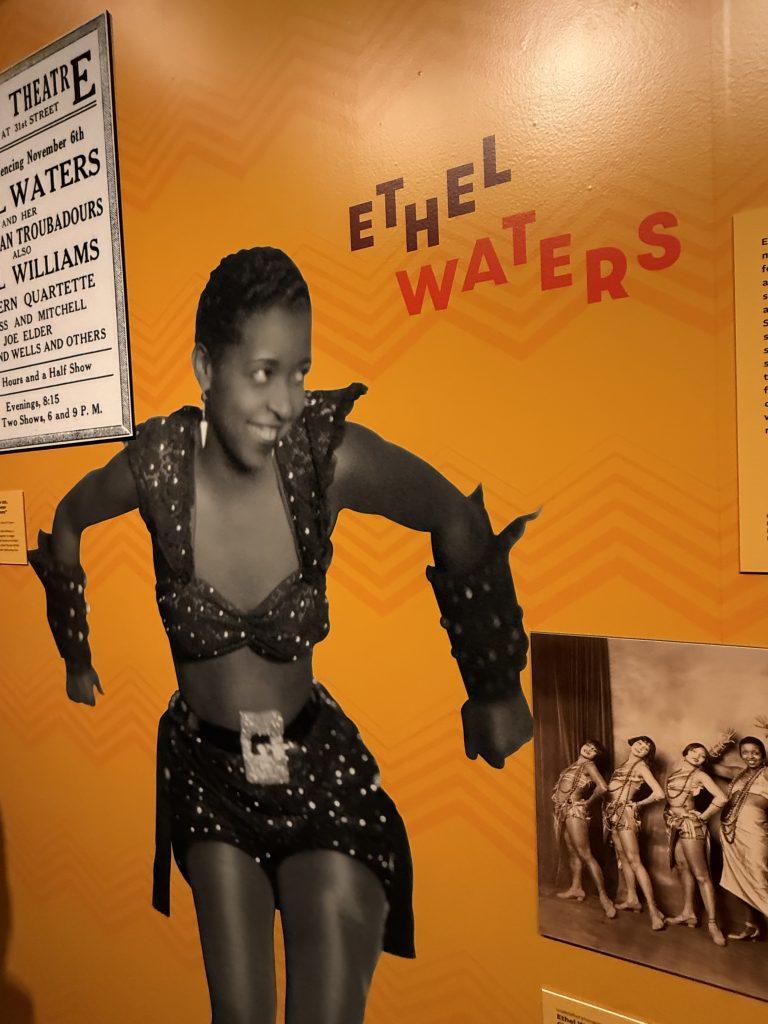
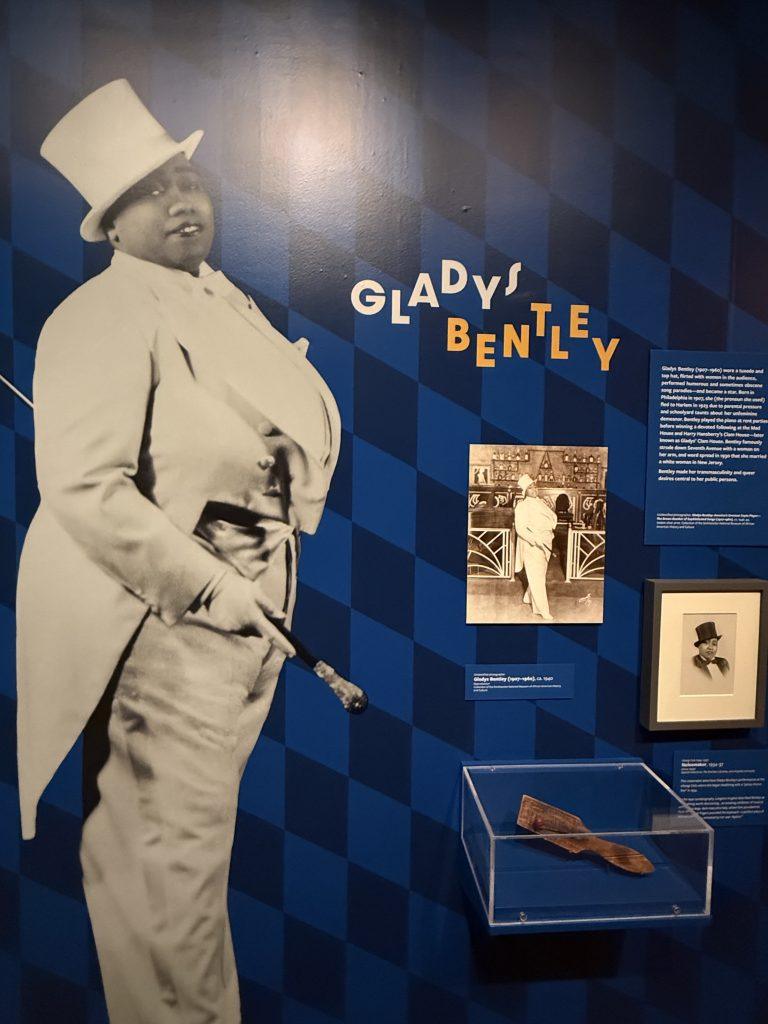
📚 Learn Black: I learned about Black queer Harlem writers and performers like Ethel Waters, Ethel Williams, Gladys Bentley, Alain Locke, and even Langston Hughes.
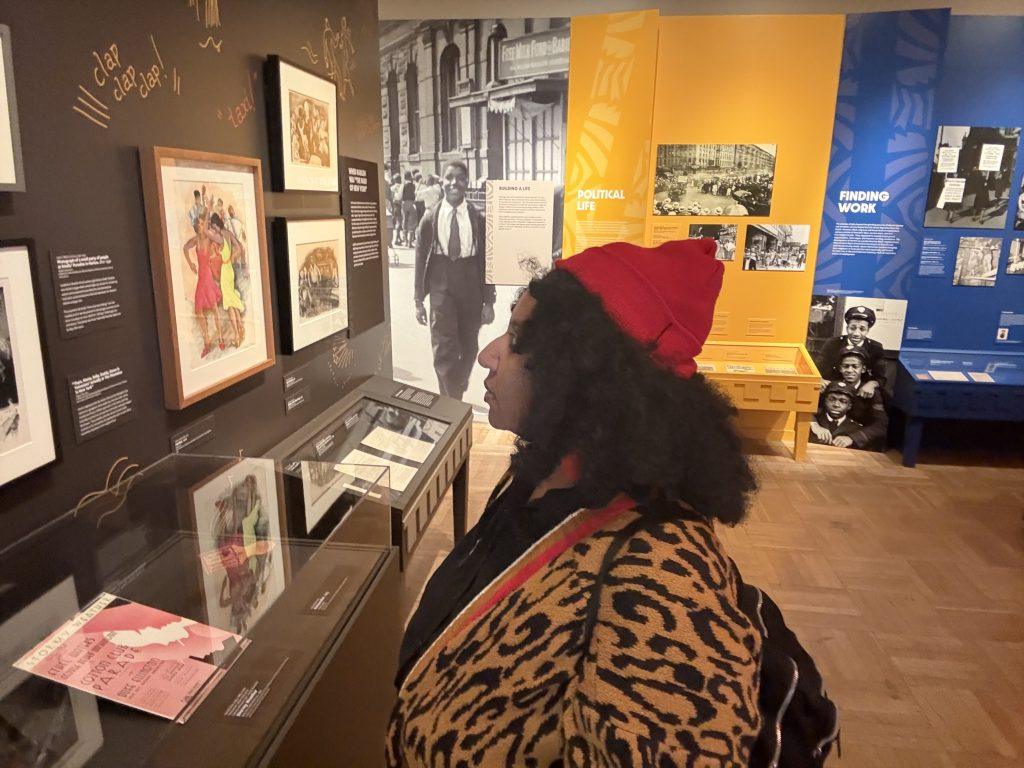
📢 Amplify Black: Audio clips, poems read through an old-school telephone receiver, archival footage, and letters gave depth to stories often overlooked.
🎉 Celebrate Black: The photos, the mini cinema, the playlist. One of the most moving moments was reading the index card messages from other visitors. The range—from joy to grief to gratitude—said everything. Seeing comments like “Yasss queen slay” and “Make Harlem Gay Again” made the space feel alive with joy.
🧐 Knowingly Black: Every detail felt intentional—from the curation to the research to the community engagement wall.
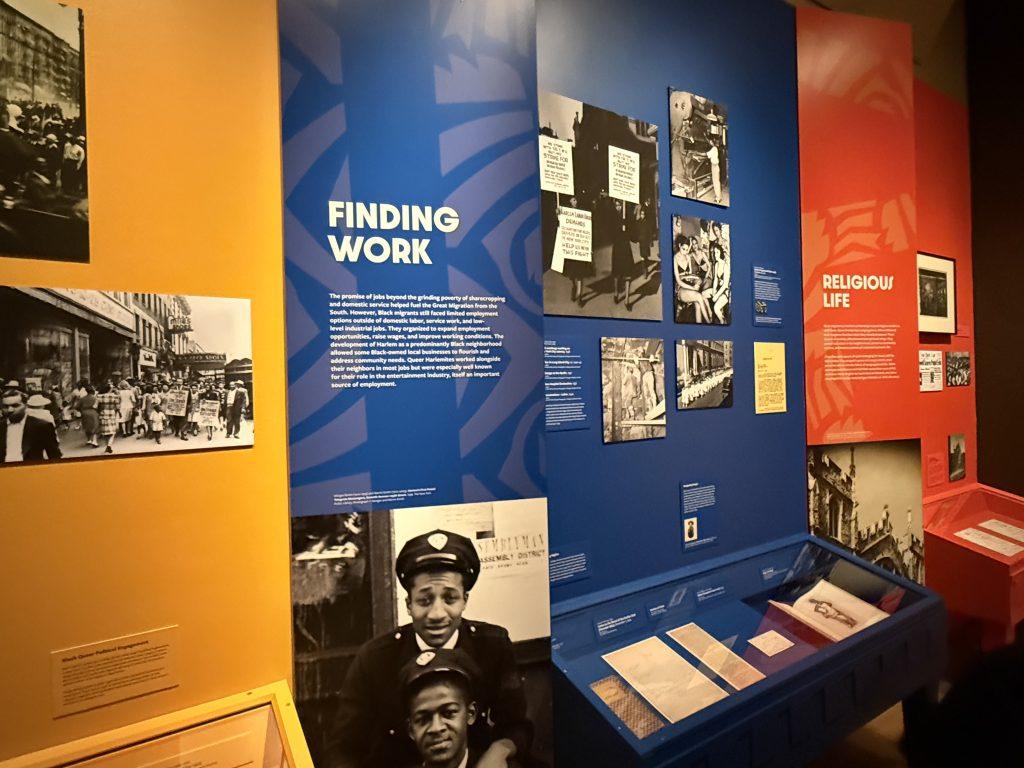
And the exhibit didn’t shy away from hard truths. It explored the tension between Harlem’s vibrant gay community and the rejection they faced from institutions, including churches like Abyssinian Baptist. Yet queer parishioners still attended.
Seeing Langston Hughes included stopped me. It’s something rarely discussed, though scholars have long noted queer subtext in his unpublished work, like To Beauty or short stories such as Blessed Assurance and Seven People Dancing.
Toward the back, the dim mini cinema played songs, some painful reminders of slurs and stigma. That tension is part of the truth too.
The whole exhibit reminded me how layered and brilliant Black queer history is a reflection of multiple identities held at once.
Here were five figures who stood out to me:
Ethel Waters & Ethel Williams, “The Two Ethels”: Ethel Waters was a trailblazer: the second African American nominated for an Academy Award; the first African American to star in her own TV show; and the first African American woman nominated for a Primetime Emmy. Meanwhile, Ethel Williams, who was in a relationship with Waters, was also a performer in her own right.
Gladys Bentley: The gender-bending blues powerhouse who performed in men’s clothing, flirted with women in the audience, and openly married her white girlfriend in 1931. A true icon.
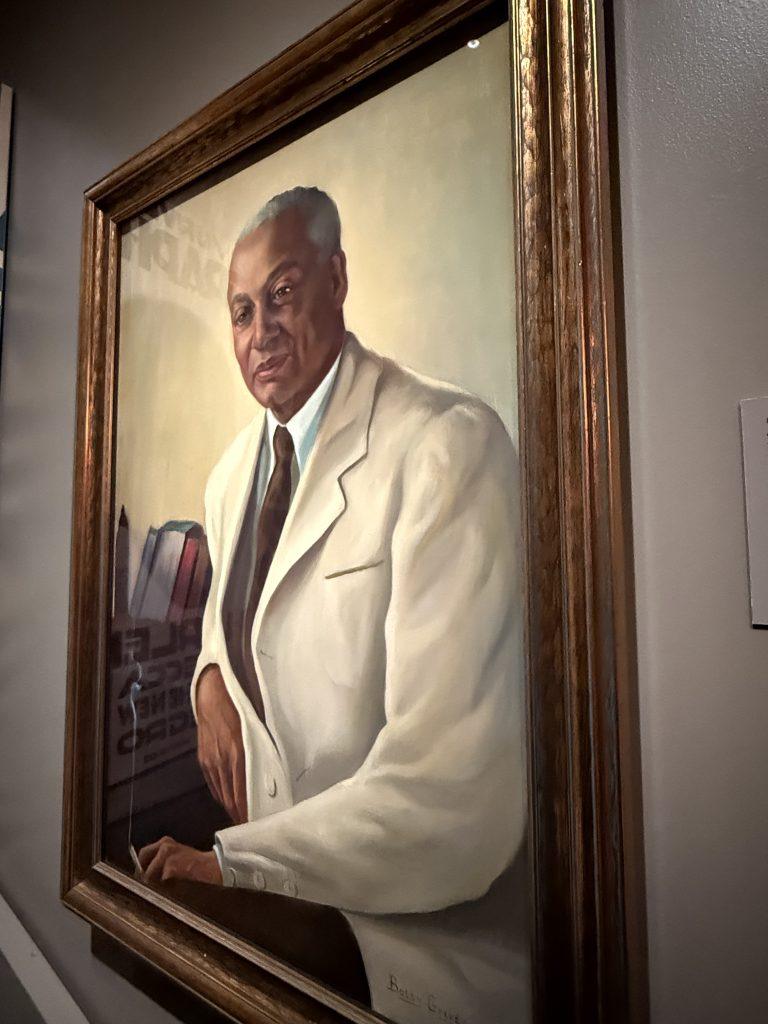
Alain Locke: First African American Rhodes Scholar, Howard philosophy professor, and the mind behind The New Negro. He helped shape the Harlem Renaissance—calling himself the “philosophical midwife.”
Wallace Thurman: Writer of The Blacker the Berry (yes, that’s where the phrase comes from). Interestingly, his queerness was known but silenced publicly. He had a brief six-month marriage to Louise Thompson, which ended after she discovered his sexual relationships with men — a fact her lawyer threatened to use during the divorce proceedings. Afterward, Thurman was arrested for a gay encounter and later moved in with his white boyfriend.
Countee Cullen: A leading poet whose work explored race, identity, and Africa’s legacy. Married twice to women but also part of Harlem’s vibrant gay social world.
And trust me, you’ll learn about many more icons inside. I won’t spoil everything. These are the stories textbooks leave out—and in some states, are actively banning. NYHS choosing to spotlight them is a statement.
📍 Location: New York Historical Society
170 Central Park West, New York, NY 10024
Right across from Central Park and a short walk from the Museum of Natural History, so it’s easy to make a whole afternoon of it.
🎟️ Tickets (continue reading for the inside scoop to get FREE access):
⏱️ Time Needed: Plan for at least 3–4 hours. There are exhibits spread across four floors, plus two short films (18 minutes each). On my visit for just 3 hours, I managed two films, three exhibits, and a quick sweep of the gift shop — but I easily could’ve spent longer.
⏱️ Best Time to Go: Fridays, 5–8 pm, when it’s pay-as-you-wish. Surprisingly, it wasn’t crowded, which made it easier to really take in the exhibits without pressure.
💡 Pro Tip: If you live in NYC, use the Culture Pass through the Brooklyn Public Library, Queens Public Library, or New York Public Library. You can reserve free tickets for once a visit a year. Reservations open on the 1st of every month for the following month (so if you want a December visit, book on November 1st!). These passes go fast, so set a reminder.
Pair your visit with:
There simply isn’t enough history told at the intersection of Black and queer. As an ally, I may not live the queer experience, but I’m committed to understanding it — and advocating for it.
Black queer history is Black history.
Black history is American history.
Not an add-on. Not a sidebar. A foundation.
Visiting this exhibit deepened my commitment to uncovering these stories, state by state, as I continue my 50-state journey spotlighting Black history that deserves to be known, honored, and remembered.
The New York Historical Society is a must-visit for anyone committed to conscious Black travel, cultural understanding, and learning the real story of America.
What exhibits are at The New York Historical Society?
In particular, the museum features a variety of exhibits that represent diverse histories. For the most up-to-date lineup, including Black history-focused exhibits, check out NYHS Exhibitions. For instance, one ongoing exhibit is Our Composite Nation: Frederick Douglass’ America.
What is The New York Historical Society?
Founded in 1804, NYHS is the oldest museum in New York and a keeper of the city’s collective memory. Remarkably, it houses early documents, artifacts, and artwork that help us understand New York’s complex identity.
Is New York Historical Society worth visiting?
Absolutely! If you want culture, untold stories, diverse perspectives, and a location near other major NYC attractions, this museum is a must-visit.
Who were the gay writers in the Harlem Renaissance?
Notable figures include Alain Locke, Countee Cullen, and Wallace Thurman. If you want to learn more, check out my brief video showcasing Alain Locke and others. Also, check out the National Museum of African American History and Culture website for more information.
What is the Gay Harlem Renaissance New York Historical?
This is an exhibit at the New-York Historical Society highlighting the lives, art, and stories of queer Black artists and writers during the Harlem Renaissance. Unfortunately, it is only open until March 2026. However, you can read more about my visit here.
Who was the first openly gay artist?
While it’s hard to pinpoint the “first,” Gladys Bentley is recognized as one of the earliest openly queer performers, boldly cross-dressing onstage and marrying a white woman in the 1930s. If you want to learn more, check out my video about Gladys Bentley and others.
Who were the queer figures in the Harlem Renaissance?
For more information, check out the National Museum of African American History and Culture: Harlem Renaissance in Queer History
This post is part of my 50 States of Untold Black History series, where I archive hidden Black history, historic landmarks, and cultural sites across all 50 states. Through Black heritage travel storytelling, in both writing and podcast form, I highlight the overlooked and untold narratives that have shaped Black American history.
Because every destination is a Black destination.
Did you know about the Gay Harlem Renaissance before this article? What did you learn here?
Because sharing is caring and costs nothing!

2 Responses
I had not heard about the gay Harlem Renaissance before I read this post. I learned a lot about the two Ethels, Gladys Bentley, and other key figures. gladys was the most surprising and courageous I believe for the 30s! I had also heard that Langston Hughes was speculated to be a queer man but had not read any history about it.
This post has inspired me to learn more history. Even today right before reading this post I was on Jackson State University campus, a national HBCU in Mississippi, and as I walked around, I just relished in the history around me. So much so that, although I told you, I would read your post once I made it home at every stoplight I found myself glued to the screen trying to take in as much as I could. The voice and tone of the writing was so relatable, engaging, and educational. It even had me thinking that although I’ve never visited New York City I could do it and actually know where I was going. Now I don’t know if that’s true or not but just know that you have me feeling like superwoman! Ha ha
Thank you for feeding my history, loving part of my brain. And thank you for doing it in such an authentic way! 1/50 cannot wait for the rest!
Thank you for thoughtfully engaging! I am glad you learned something new and made connections.